Premium components engineered for robust grid deployment, optimal power conversion, and smart agricultural integration.
Unlocking the Land-Energy-Water Nexus through Sophisticated High-Yield Solar-Agricultural Intersections
The global energy and agricultural landscapes are undergoing a profound paradigm shift driven by land scarcity, climatic volatility, and the imperative for clean, decentralized electrification. Agrivoltaic systems (APV)—the co-location of photovoltaic arrays and agricultural production—emerge as one of the most promising methodologies to address this modern trilemma. By dynamically optimizing solar irradiance partitioning, agrivoltaic structures facilitate a double-harvest architecture: clean utility-scale electricity from the upper layer and high-quality crop yields from the lower soil level.
SEO Insight & Information Gain: Unlike basic utility-scale solar farms that completely eliminate arable land, next-generation agrivoltaic systems enhance local microclimates, reduce soil moisture evaporation by up to 30%, and protect sensitive crops from high thermal stress, yielding a Land Equivalent Ratio (LER) of up to 1.6 or higher.
As a pioneering force in the global solar manufacturing sector, Anhui Ran Solar Co., Ltd. specializes in the deep research, technological development, vertical production, and global export distribution of premium solar PV products. Since our foundation in 2011, we have driven critical innovations across the solar supply chain, surpassing industry benchmarks in manufacturing scale, mechanical designs, and module conversion efficiencies.
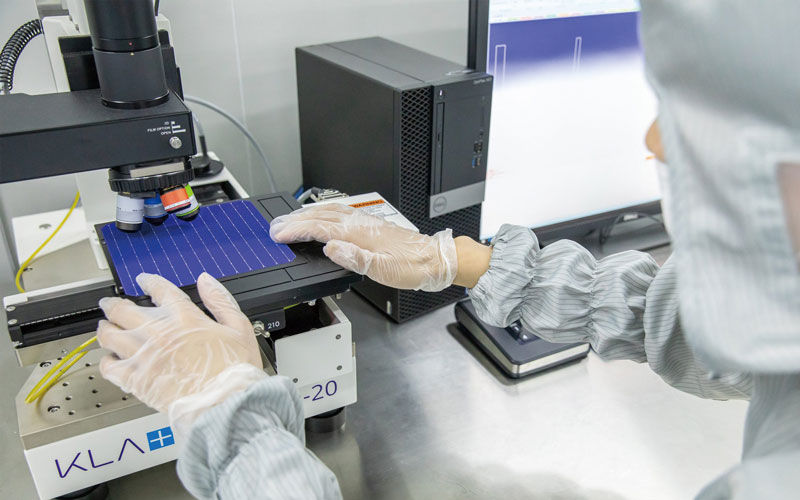
With a current global manufacturing capacity of 7.5 GW and a proven deployment footprint exceeding 15 GW by the end of 2023, Anhui Ran Solar continues to deliver reliable clean energy systems across residential, commercial, industrial, and agricultural projects globally.
Tracing the technical evolution toward high-transmittance bifacial cells, tracking mechanisms, and AI-driven microclimate controllers.
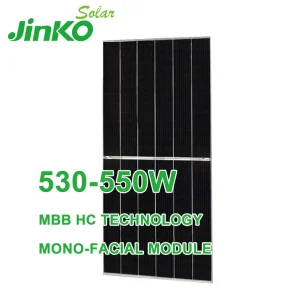
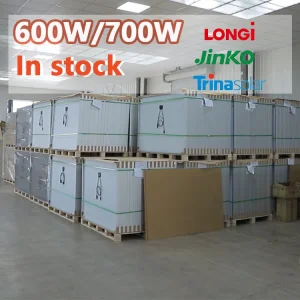
The integration of high-efficiency N-type monocrystalline solar cells, such as the Jinko Tiger Neo 580W-600W, has revolutionized agrivoltaic performance. High bifaciality ratios (exceeding 85%) allow systems to generate clean energy from both direct sunlight and reflected light from the crop canopy beneath, enhancing energy output per square meter.
Static racking systems are rapidly giving way to smart Dual-Axis Solar Tracking Systems. Utilizing algorithmic astronomical calculations, trackers dynamically adjust tilt angles to optimize sunlight transmission to shade-sensitive crops during critical photosynthesis windows, while maximizing power yield during peak solar hours.
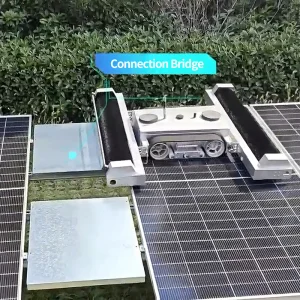
Dust and agricultural debris represent major losses in energy efficiency. Deploying Automatic Solar Panel Cleaning Robots specifically optimized for high-clearance agrivoltaic mounts eliminates the need for manual maintenance, drastically lowering operating costs without damaging underlying crops.
Looking to the future, the research focus centers on semi-transparent PV glass technologies and spectrally selective solar panels. By engineering coatings that only absorb non-photosynthetic wavelengths (such as green and UV spectra) while allowing photosynthetically active radiation (PAR) to pass through, next-generation systems will deliver higher crop health alongside peak energy conversion.
How Anhui Ran Solar bridges structural engineering and horticultural requirements across global biomes.
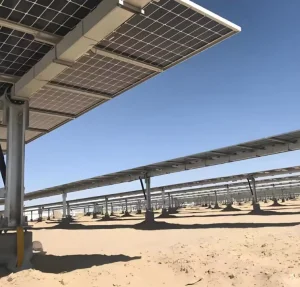
Traditional solar farms block tractors and heavy agricultural equipment. Our customized ground-mount structures offer clearance heights of up to 4.5 meters and wide horizontal spans of up to 8 meters. This structural flexibility allows for the cultivation of staple crops such as wheat, corn, and soy beneath the solar panels, facilitating mechanization without losing valuable arable land.
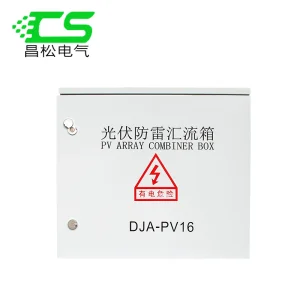
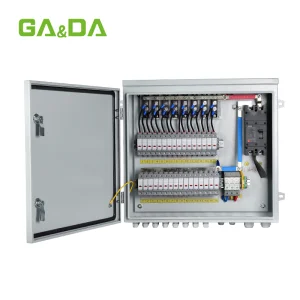
Solar panels provide vital shade that reduces heat stress in livestock (dairy cows, sheep, and poultry), thereby improving milk production, weight gain, and animal welfare. The structural engineering features high-strength cabling systems and protected wiring harnesses to prevent livestock damage, combined with robust 16 Input 1 Output Combiner Boxes to manage current flows safely.
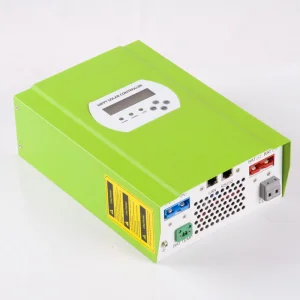
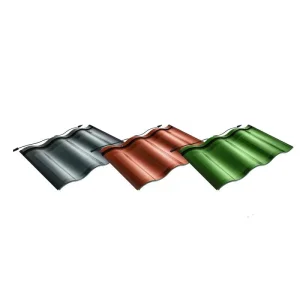
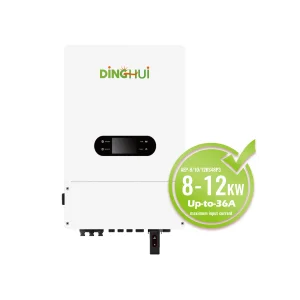
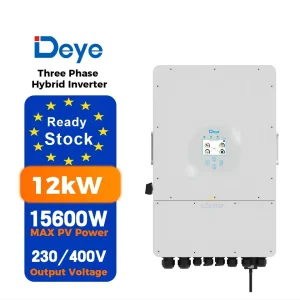
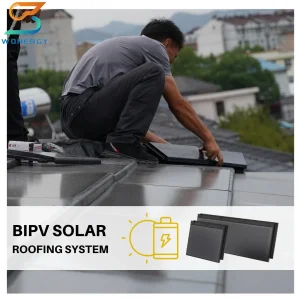
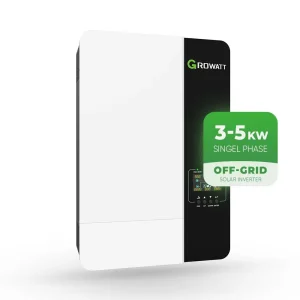
By integrating PV single modules like the Black Hantile Solar Roof Tiles or Integrated BIPV Roofing Tile Solar Shingles directly into agricultural facility buildings, we convert processing barns, drying units, and storage warehouses into self-sustaining power stations. Excess energy can be routed through smart Three-Phase Hybrid Solar Inverters directly to high-capacity battery storage banks for off-grid operations.
Why Anhui Ran Solar is recognized as a premier global OEM/ODM solar manufacturer.
At Anhui Ran Solar, manufacturing is executed via fully automated production lines designed to minimize human error, maximize output precision, and ensure strict traceability across all production stages.
Over 40 patented technologies have been successfully implemented to optimize production processes. This encompasses automated silicon wafer slicing, advanced cell sorting, dual EL testing for microcrack detection, and robotic module assembly lines. We manage quality at every node, from raw materials inspection to final structural stress tests.
Our factories are systematically aligned with international standards, ensuring seamless project approvals and bankability worldwide. Anhui Ran Solar holds certifications for:
Quality Management System certifying elite engineering and reliability.
Environmental Management System validating sustainable production processes.
Occupational Health & Safety audited by DNV GL and GZCC.
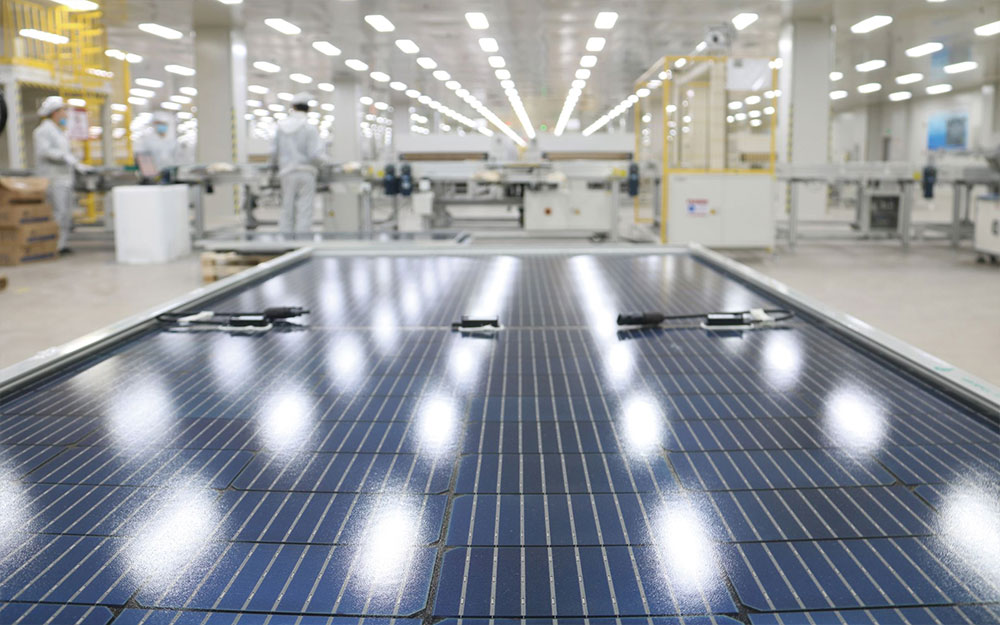
Navigating compliance, structural calculations, and mechanical integrity for global utility-scale solar farms.
Procurement directors and EPC contractors must evaluate strict environmental, structural, and electrical specifications before deploying agrivoltaic arrays. Because these systems are positioned above crops, they are exposed to higher humidity from transpiration, fertilizer-induced corrosion, and varying soil loads.
Our mounting steel and high-rise structural foundations undergo intensive wind tunnel testing. We design profiles capable of sustaining wind loads up to 60 m/s and snow loads up to 1.5 kN/m², using Hot-Dip Galvanized coating (minimum 80 microns thickness) to prevent chemical corrosion over a 25-year operational lifespan.
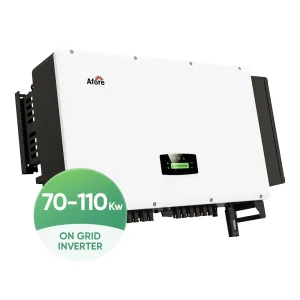
Due to agricultural dust and irrigation spray, balance of systems (BOS) components require high ingress protection. Our IP65 DC Combiner Boxes and smart Three Phase String Inverters are engineered with advanced thermal dissipation mechanisms and integrated surge protection devices (SPDs) to mitigate grid failures and ground-fault hazards.
Assisting developers worldwide in securing local grid permits, environmental approvals, and system certifications.
Successfully executing an agrivoltaic project requires meeting local grid codes, agricultural zoning ordinances, and environmental impact assessments. Anhui Ran Solar supports global developers through comprehensive structural engineering documentation, simulation files (PVSyst and CAD files), and local code compliance verifications.
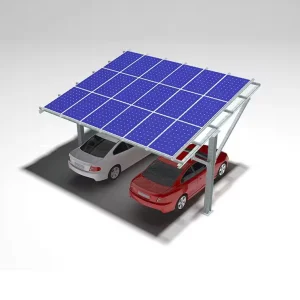
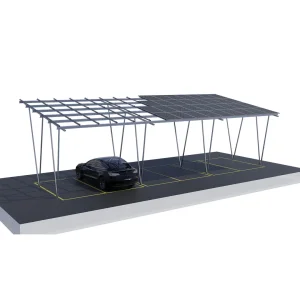
Whether integrating Ground Mount Solar Carports, smart dual-axis tracking arrays, or building-integrated PV roofs, we ensure that every system is certified by internationally recognized test laboratories. Our certifications ensure fast approvals from regional grid operators, utility companies, and financial institutions worldwide.
High-performance solar modules, custom structural systems, and intelligent grid interfaces.
Expert technical insights targeting typical EPC procurement questions and structural validations.
 Ran Solar