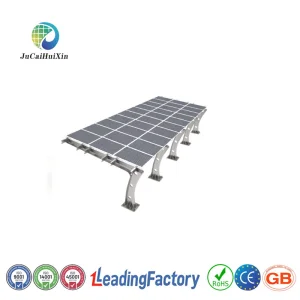
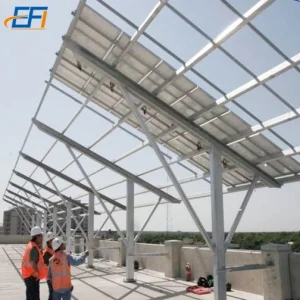
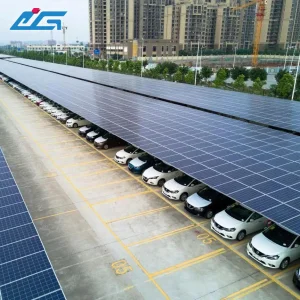
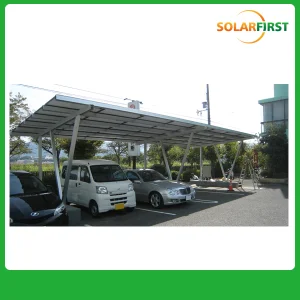
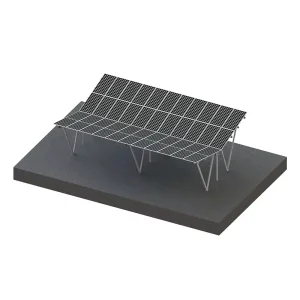
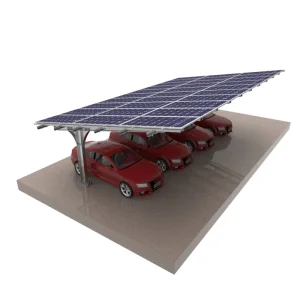
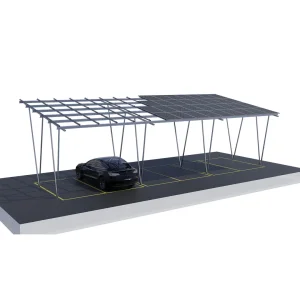
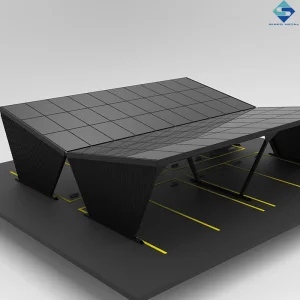
Explore our engineered solar carport mounts and structural steel frameworks optimized for high albedo reflectivity in commercial developments throughout the metropolitan area of São Paulo.
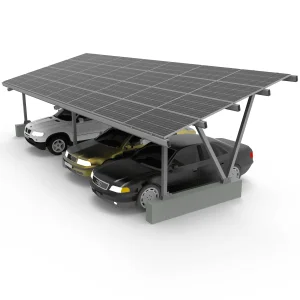
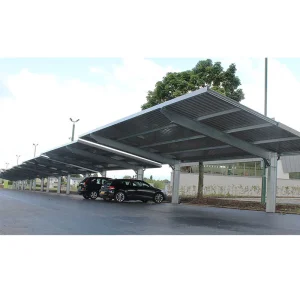
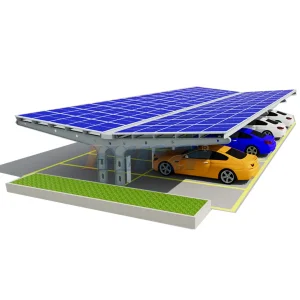
São Paulo, the primary financial and industrial hub of South America, is undergoing an aggressive transition toward distributed generation (GD). Under the regulatory framework of Lei 14.300, C&I (Commercial and Industrial) entities are leveraging real estate assets like parking lots to generate on-site electricity.
Bifacial dual-glass modules have emerged as the gold standard for these deployments. Unlike standard monofacial modules, bifacial panels utilize light from both sides, capturing reflected irradiance (albedo) from the ground surfaces beneath the carport. When integrated with highly reflective light-colored concrete or coated asphalt standard in modern São Paulo commercial complexes, rear-side yield boosts of up to 15% to 25% are easily achievable, drastically lowering the Levelized Cost of Energy (LCOE).
Additionally, the dual-glass (glass-glass) configuration offers unmatched structural integrity, keeping mechanical degradation and moisture ingress to absolute minimum levels. This is critical in the humid subtropical climate of São Paulo, where seasonal downpours and thermal fluctuations stress traditional backsheet polymer materials.
High utility tariffs operated by ENEL Distribuição São Paulo incentivize industrial parks in Campinas, Sorocaba, and the ABC region to invest in local solar microgrids. Carports turn passive parking zones into dynamic power generating assets.
The global transition to n-type TOPCon bifacial cell architecture has driven down the capital costs of dual-glass configurations, making them the default standard for zero-emission corporate fleets worldwide.
Integrating EV chargers directly into solar carport steel support structures minimizes electrical cabling distances, matching municipal charging station layouts required across major Brazilian urban centers.
As a leading solar products manufacturer, Anhui Ran Solar Co., Ltd. specializes in the research, development, production, and global sales of high-quality solar PV products. Since our establishment in 2011, Anhui Ran Solar has achieved remarkable milestones, surpassing many competitors in production capacity, innovative designs, and technological advancements. We firmly believe that innovation drives progress, and we continually pursue new technologies and higher efficiencies to empower a sustainable energy future.
Currently, Anhui Ran Solar serves utility-scale, commercial, and residential projects worldwide. By the end of 2023, our solar modules have powered millions of square meters of urban infrastructure, including extensive commercial solar car park structural setups and rooftop mounts engineered to withstand harsh localized load requirements.
Innovation is at the core of Anhui Ran Solar’s strategy. We provide a full spectrum of advanced renewable energy technologies to meet the unique needs of every customer, whether utilities, commercial enterprises, or industrial clients. Our dedicated R&D team continuously explores next-generation solar solutions, including high-efficiency modules, bifacial technologies, and smart energy solutions.
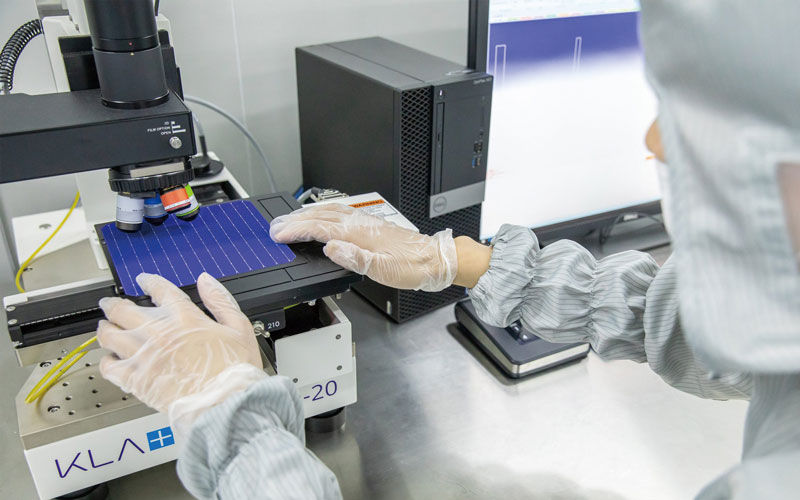
We invest heavily in state-of-the-art laboratory equipment and recruit top-tier engineering talent, ensuring that our products remain at the cutting edge of the renewable energy industry. This relentless pursuit of technological innovation enables our customers to achieve higher performance, reduced costs, and superior reliability in their solar installations.
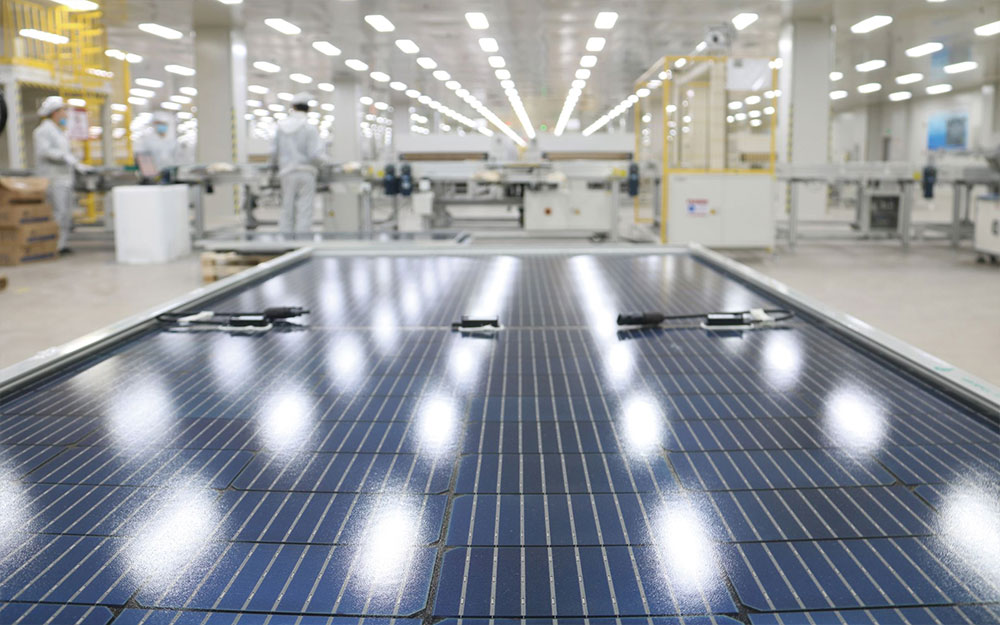
At Anhui Ran Solar, our modularized, fully automated production lines enable rapid delivery, optimized costs, and consistent quality. We have segmented the production process into closely coordinated, automated sectors to maximize efficiency and minimize human error. Over 40 patented technologies have been implemented to optimize production processes, covering every stage from raw material inspection to final packaging. Each step is monitored and recorded in real time, ensuring traceability, precision, and reliability across our manufacturing operations.
Our manufacturing compliance framework guarantees performance in extreme conditions. Certified standards include:
Deploying solar carports utilizing bifacial dual-glass technology requires careful calculation of environmental parameters. The back-side power generation (bifacial gain) is influenced by three main variables: Albedo Factor (reflectivity of the ground surface), Structure Height, and the Bifaciality Coefficient of the solar cells.
Standard dark asphalt has a low albedo of around 0.10. Applying light grey concrete increases albedo to 0.35. Coating the parking lanes with specific white reflective epoxy finishes raises the albedo to over 0.70. Our bifacial cells leverage this reflected light, contributing to a direct energy increase.
To maximize back-side light capture, carport structures should ideally stand at a minimum clearance height of 2.2 to 2.5 meters. This allows diffuse and reflected solar rays to scatter evenly across the underside of the array, avoiding self-shading zones.
For public parking lots in busy industrial zones, fire protection compliance is vital. Glass-glass packaging provides superior fire resistance, meeting strict class A fire classification codes, while traditional backsheet polymer options fall short.
São Paulo is subject to localized high wind gusts and severe storms, particularly during the transition seasons. Standard solar mount brackets must be built in accordance with ABNT NBR 6123 (Forças devidas ao vento em edificações). Our aluminum and hot-dip galvanized steel carport support brackets are designed to withstand wind loads up to 45 m/s. High strength foundations (ballasted concrete blocks or cast-in-place concrete piles) are calculated to prevent structural uplift and shear stress over decades of operation.
Logistics centers in São Paulo regions like Guarulhos or Cajamar manage vast truck and fleet fleets. Dual-glass carports offer weather shelter for fleet vehicles while generating clean, low-cost electricity for warehouses and cold storage units.
Shopping mall car parks in major cities are ideal for integrated solar covers. These systems shade customer cars, lower cabin temperatures, and power the mall's HVAC, improving energy efficiency.
Industrial facilities combine solar structures with high-power EV charging terminals. Dual-glass modules provide green power directly to commuter vehicles, avoiding peak demand charges on the local grid.
Depending on ground surface reflectivity (albedo), typical rear-side generation adds 12% to 22% in energy output. Upgrading the parking surface with light grey concrete or specialized reflective paint boosts efficiency further, helping to shorten the payback period of your solar investment.
All structures are designed to comply with ABNT NBR 6123 standards. Engineering designs account for regional wind pressures and load conditions, while electrical configurations are planned to meet NBR 5410 and NBR 16274 parameters for safe grid connection.
Dual-glass modules offer superior resistance to moisture, UV rays, and thermal degradation. They provide high mechanical load capacity and class A fire protection, which is essential for projects close to commercial and residential structures in metropolitan São Paulo.
Yes, our brackets and support beams can be adjusted to match varying terrain and slope requirements. Custom configurations are available to optimize sunlight exposure and ensure proper water drainage during the rainy season.
Browse our full range of structural solutions, including aluminum systems, heavy-duty steel options, and customizable mounting frameworks built for modern parking lots and high-efficiency solar car parks.
Anhui Ran Solar is committed to accelerating the global energy transition. By providing innovative, reliable, and efficient solar solutions, we aim to empower communities, businesses, and governments worldwide to harness the power of the sun for a cleaner, greener future. Our structural designs are continually updated to meet local regulatory and climate challenges, ensuring dependable energy performance for years to come.
 Ran Solar