Understanding the impact of snow cover on solar energy production is crucial for optimizing renewable energy sources. Research from the National Renewable Energy Laboratory (NREL) indicates that solar panels can lose up to 30% efficiency in snowy conditions. This raises the question: why does snow cover affect solar energy production?
When snow accumulates on solar panels, it blocks sunlight from reaching the cells. The albedo effect, where snow reflects sunlight, can further complicate energy generation. According to a study by the International Energy Agency, areas with frequent snowfall experience significant variances in energy output.
Mitigating snow cover is essential, yet often overlooked in solar energy planning. Installing panels with steeper angles can reduce snow buildup. However, this requires careful consideration of location and costs. Understanding these dynamics allows for informed decisions, ultimately improving energy efficiency in snowy regions.
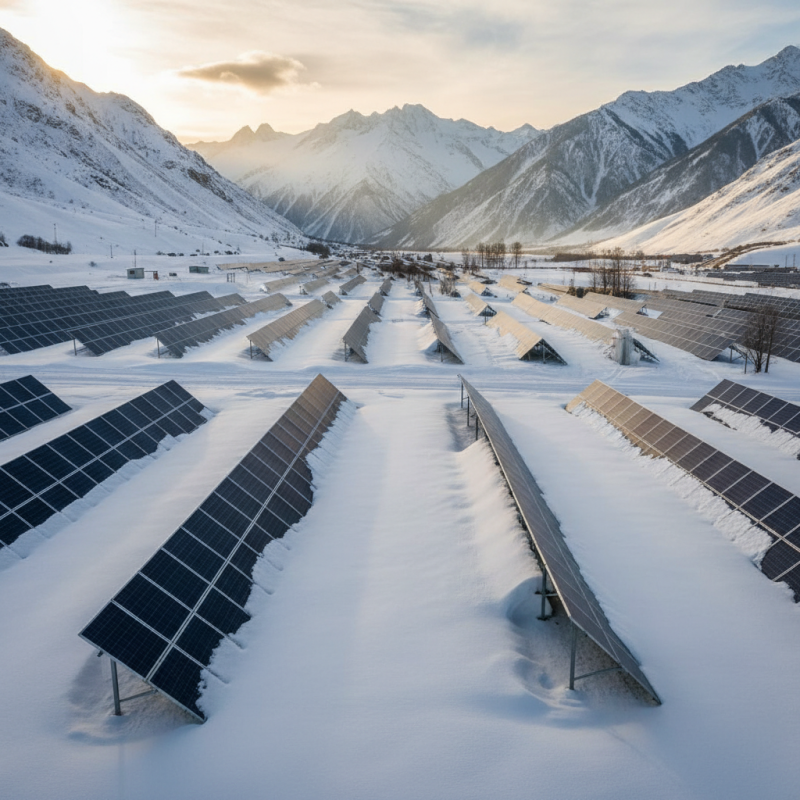
Snow cover can significantly impact solar energy production. Understanding its effects is essential for maximizing efficiency. A study by the National Renewable Energy Laboratory (NREL) shows that snow can reduce solar panel output by 30% or more. This is largely due to accumulation blocking sunlight.
Solar panels require exposure to sunlight for optimal performance. When snow covers panels, energy generation declines sharply. Interestingly, snow can also enhance energy production once it melts, as the reflective properties can boost how much light reaches the panels.
**Tip:** Regular maintenance, including snow removal from panels, can help maintain energy efficiency.
Installers recommend using tilt angles to minimize snow accumulation on installations. Locations with heavy snowfall might consider design adjustments to enhance energy capture while considering snow effects. Snowmelt during warmer months can also boost energy yield through increased sunlight glow.
**Tip:** Monitor local weather patterns to anticipate snow cover effects. Understanding these factors will enable more informed decisions for solar energy investments.
This chart illustrates the correlation between varying levels of snow cover and the average solar energy production in kilowatt-hours (kWh). As snow cover increases, the amount of solar energy generated decreases significantly.
Snow cover significantly impacts solar energy production due to its unique physical properties. Snow is a highly reflective material, often referred to as having a high albedo. This means it reflects a considerable amount of sunlight rather than absorbing it. The presence of snow can decrease the efficiency of solar panels, as they may receive less direct sunlight. In some cases, snow can even stay on the panels for extended periods, further diminishing energy output.
The interaction of light with snow is complex. Snow can scatter light in various directions. This scattering effect may sometimes create diffuse light conditions that could potentially benefit solar panels. However, this benefit is often overshadowed by the initial loss of direct sunlight due to the snow cover. Some solar panel designs account for these conditions, but challenges remain. Frequent clearing of snow from panels is sometimes necessary to maintain optimal performance.
Understanding these physical properties requires ongoing research. There's a need to assess how different snow types and depths can affect energy yield. Weather changes further complicate this issue. For instance, wet snow is heavier than dry snow and may impact panel tilt and structural integrity. Addressing these variables can improve the reliability of solar energy systems in snowy regions, ensuring better performance in adverse conditions.
Snow cover plays a crucial role in solar energy production. When snow accumulates on solar panels, it blocks sunlight. This leads to reduced energy output. A recent study found that snow can decrease solar panel efficiency by as much as 60% in winter months. The presence of snow not only impacts performance but also the overall energy yield of solar installations.
Ice and snow should be carefully monitored. A report from the National Renewable Energy Laboratory indicates that solar panels can produce 30% less energy if heavily covered. Reflective surfaces like snow may bounce some sunlight back, but the overall impact is negative. Additionally, if not removed promptly, the heavy weight of snow can physically damage solar panels. On the other hand, melting snow can create momentary boosts in efficiency, albeit fleeting.
While some suggest snow as a potential insulator for solar panels, the drawbacks often outweigh the benefits. Operators must routinely inspect and clear snow to maintain optimal energy output. Overall, understanding these effects is essential for solar energy operators in snow-prone regions. Regular maintenance and monitoring are crucial to maximize efficiency and minimize losses.
| Location | Average Snowfall (inches) | Solar Panel Efficiency (%) | Energy Output (kWh/month) | Effect of Snow Accumulation |
|---|---|---|---|---|
| Boston, MA | 40 | 85 | 120 | Reduced output during heavy snowfall |
| Denver, CO | 60 | 90 | 150 | Moderate impact, clears quickly |
| Minneapolis, MN | 54 | 80 | 100 | Significant reduction in efficiency |
| Syracuse, NY | 118 | 75 | 80 | High disruption due to heavy snow |
| Seattle, WA | 6 | 92 | 175 | Minimal impact on output |
Snow cover can significantly impact solar energy production. Understanding the factors that influence snow melting rates on solar installations is crucial for optimizing performance. Snow retention on panels can lead to a decrease in energy output. Research indicates that snow can reduce solar efficiency by up to 70% in winter months.
Temperature plays a crucial role in melting snow. Warmer days promote faster snow melting. According to the National Renewable Energy Laboratory, a rise of just 5°C can enhance snow melting rates substantially. Sun angle is also important. During winter, the sun's lower position in the sky means less direct sunlight on panels, leading to prolonged snow retention.
Wind speed can assist in snow removal. Strong winds can blow snow off panels, increasing solar production. However, inconsistent wind patterns complicate this factor. Additionally, panel tilt affects snow accumulation. Steeper angles help facilitate snow shedding, while flat installations retain snow longer. These variables highlight the need for tailored approaches and ongoing research to understand their combined effects on energy yields.
Snow cover can significantly hinder solar energy production in winter. The accumulation of snow on solar panels reduces their efficiency. This occurs because the snow blocks sunlight, preventing proper energy capture. In snowy regions, this problem is more pronounced. Ensuring efficiency in these areas requires targeted strategies.
One effective approach is to incorporate tilt adjustments for solar panels. A steeper angle can help snow slide off more easily. Similarly, using surfaces that enhance the melting of snow can be beneficial. For instance, heated panels can minimize snow accumulation. These methods depend on local climates and weather conditions.
Regular maintenance is crucial. Inspecting panels frequently helps to remove snow buildup promptly. Engaging local communities can raise awareness of the importance of keeping solar panels clear. Innovative solutions can draw on local expertise, aiming for better results.
Each region may face unique challenges, and open discussions can foster improvements. Solutions should be adaptable, recognizing that not all strategies work everywhere.
: Snow cover significantly decreases solar energy production by reflecting sunlight instead of allowing it to be absorbed.
Albedo refers to snow's high reflectivity, meaning it can reflect a lot of sunlight and reduce solar panel efficiency.
Snow can scatter light and create diffuse conditions, which might help solar panels indirectly, though this is often minor.
Snow can stay on panels for extended periods, leading to significant energy output loss, especially in winter months.
Warmer temperatures and higher sun angles help snow melt faster on panels, improving energy production.
Strong winds can blow snow off panels, increasing solar output, but unpredictable wind patterns make this variable.
Steeper panel angles facilitate snow shedding, while flat installations can retain snow longer and reduce efficiency.
Research is essential to assess different snow types and their effects on energy yields, considering weather complexities.
Yes, wet snow is heavier than dry snow, and this can impact panel tilt and overall structural integrity.
Identifying tailored approaches to mitigate snow accumulation is necessary for optimizing solar energy systems in these areas.
Snow cover significantly impacts solar energy production due to its physical properties and accumulation effects on solar panels. Understanding why does snow cover affect solar energy production involves recognizing how snow's reflective capabilities can diminish the amount of sunlight reaching solar panels, thereby reducing their efficiency and output. Accumulation of snow not only blocks sunlight but also creates challenges for energy generation in snowy regions.
Factors such as temperature, solar panel design, and local weather patterns play a crucial role in influencing snow melting rates on installations, which can further affect energy output. To mitigate these challenges, various strategies can be employed to enhance solar energy production in areas with significant snowfall. These include utilizing heated panels, optimizing panel angles, and implementing routine maintenance to ensure maximum energy efficiency during winter months.

Ran Solar