When considering solar energy for cooling, many homeowners ask, "what size solar array is needed to run an air conditioner?" Understanding this is crucial for effective installations. Solar panels convert sunlight into electricity, offering a renewable energy source. However, the size of the solar array directly influences your air conditioner's efficiency and performance.
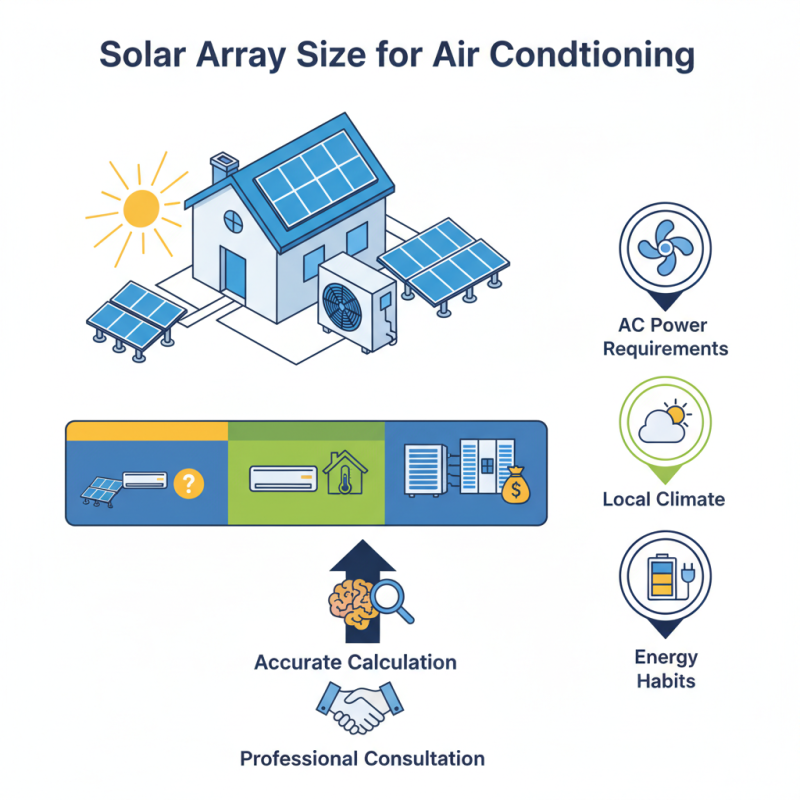
Multiple factors play a role in determining the ideal size. Your air conditioner’s power requirements, local climate, and energy consumption habits need to be assessed. For instance, a central air unit may demand a larger solar array compared to a window-mounted system. Potential energy savings, while substantial, may not always justify a large investment without prior planning.
The potential challenges are worth noting. Overestimating your needs can lead to unnecessary expenses. Meanwhile, underestimating may result in insufficient power. Therefore, calculating accurately becomes essential. Engaging with a professional can provide clarity. They can help you analyze your specific situation, ensuring that you invest wisely in solar energy for your air conditioning needs.
Understanding the Power Requirements of Air Conditioners: Key Specs and Metrics
When choosing a solar array for an air conditioner, understanding power requirements is crucial. The average air conditioning unit consumes between 1,500 to 3,500 watts. This range varies based on the unit's size and efficiency. The U.S. Department of Energy highlights that a standard central air conditioner can use up to 3,000 watts per hour. Therefore, knowing the wattage can help determine the right solar panel size.
Calculating the solar array size involves several metrics. To run a 2,000-watt air conditioner for eight hours, approximately 16 kilowatt-hours (kWh) are needed daily. A typical solar panel generates about 300 watts, translating to around 1.5 kWh per day. Consequently, at least ten panels would be necessary to meet the needs of one air conditioning unit, depending on local sunlight availability.
Current industry reports emphasize the importance of efficiency and sunlight access. In some regions with less sun exposure, more panels may be needed. It’s essential to factor in energy losses too. This means that a thorough assessment should include not just the basic calculations, but also considerations for shading and orientation of the solar array. Always seek local data for accurate estimates.
Calculating Solar Array Size: Energy Consumption and Efficiency Factors
Calculating the right size for a solar array to power your air conditioner is crucial. Energy consumption can vary widely. A typical central air conditioner uses about 3,000 to 5,000 watts per hour. Factors such as location, climate, and system efficiency play significant roles in your calculation.
Let's consider efficiency factors. The average solar panel produces around 300 watts per panel. To power a 4,000-watt air conditioner, you'd need roughly 14 panels, assuming optimal sun exposure. But solar efficiency isn't uniform. Real-world conditions—like shading or panel orientation—can reduce output by 20% or more. This means your initial estimate might be insufficient.
Weather patterns also influence this calculation. In sunny regions, panels operate at peak efficiency. However, in cloudy areas, energy output dips. A report by the National Renewable Energy Laboratory emphasizes that local sunlight exposure and energy demands need careful consideration when sizing your solar setup. This step is often overlooked, leading many homeowners to underestimate their requirements. Ultimately, it’s about aligning your energy needs with the solar technology available.
Solar Array Size Needed for Air Conditioners
This chart represents the estimated solar array size required to power different air conditioner units based on their energy consumption (measured in watts) and the efficiency of the solar panels.
Geographic Impact on Solar Needs: Sunlight Hours and Climate Variability
When determining the size of a solar array for an air conditioner, geographic factors play a crucial role.
The amount of sunlight your location receives directly affects solar panel efficiency. Areas with long, sunny days generate more energy. In contrast, regions with frequent cloud cover need larger systems to compensate. This variability makes understanding your local climate essential.
Climate influences not only sunlight hours but also energy consumption patterns. In hotter regions, air conditioning needs are higher. This leads to greater energy demands, requiring more solar capacity. However, cooler climates may have less reliance on air conditioning. Therefore, the solar design should reflect these differences. Installing panels without considering local weather may leave you underpowered.
Additionally, seasonal changes can impact energy needs. In summer, days are longer and hotter. A smaller solar array might work in winter, but summer months may require an upgrade. Planning requires attention to these details. Installing the right system involves understanding your environment. Every region has its unique requirements that should guide your solar decisions.
Evaluating Solar Panel Output: Wattage Ratings and System Losses
When determining the right size solar array for your air conditioner, understanding wattage ratings is crucial. Solar panels come with specific output ratings. A typical panel might produce between 250 to 400 watts under optimal conditions. However, real-world factors can lead to reduced efficiency. Issues like shading, temperature, and dirt can lower performance by up to 25%. It’s vital to consider these losses when planning your solar system.
In addition to panel efficiency, the energy requirements of your air conditioning unit play a significant role. An average air conditioner may require about 2,000 to 4,000 watts per hour. Calculate how many hours it operates daily for a clearer picture of energy needs. If your air conditioner runs for 8 hours each day at 3,000 watts, you’ll need 24 kWh daily. When factoring in system losses, the required solar output may increase substantially. You might even find that the ideal system size is larger than anticipated.
Evaluating the appropriate size for a solar array involves more than just arithmetic. Climate conditions and your roof's orientation can also influence output. Engaging with a solar specialist might be beneficial. They can help navigate these complexities and ensure your system meets your needs efficiently.
Financial Considerations: Cost-Benefit Analysis of Solar for AC Units
When considering solar arrays for air conditioning units, financial aspects are crucial. A well-designed solar system can reduce electricity costs significantly. According to the National Renewable Energy Laboratory (NREL), solar energy can save homeowners up to 70% on their energy bills. However, initial installation costs can be daunting. The average price per watt ranges from $2.50 to $3.50, depending on the system's complexity and local incentives.
A cost-benefit analysis often reveals varying outcomes. While solar panels offer long-term savings, the upfront investment can take 5 to 10 years to recoup. For instance, a typical central air conditioning unit requires about 3,000 watts to operate. This translates to a solar array of approximately 4-6 kW, potentially costing $10,000 to $21,000 after incentives. Not every homeowner may find this financially viable. Regional weather patterns and incentives vary widely, affecting overall savings.
Understanding these factors is vital. Solar energy isn't a one-size-fits-all solution. Homeowners should evaluate their cooling needs and local solar policies. They must weigh the long-term benefits against the initial investment. Personal energy consumption trends also play a role. Reflecting on these aspects can help in making informed decisions about installing solar arrays for air conditioning.
FAQS
: A central air conditioner typically uses about 3,000 to 5,000 watts per hour.
You'd need roughly 14 solar panels to power a 4,000-watt air conditioner under optimal conditions.
Shading, panel orientation, and geographic location can reduce solar panel efficiency by 20% or more.
The amount of sunlight and energy demands vary by location, impacting how much solar capacity is needed.
Energy needs can increase in summer due to higher temperatures and longer days, impacting system size.
Underestimating sunlight exposure may lead to insufficient solar energy production for air conditioning needs.
Conclusion
To determine what size solar array is needed to run an air conditioner, it's essential to first understand the power requirements of the unit. This includes key specs such as wattage, energy consumption metrics, and the unit's efficiency ratings. Once you have a grasp of these factors, you can calculate the necessary solar array size by considering not just the energy needs of your air conditioner but also the efficiency of the solar panels and any potential system losses.
Geographic factors play a significant role in this calculation, as sunlight hours and climate variability can affect how much energy your solar array can generate. It's crucial to evaluate the output of the solar panels based on their wattage ratings and the local environment. Finally, conducting a cost-benefit analysis will help assess the financial viability of installing a solar system for your air conditioning needs, ensuring that you make an informed decision that balances upfront costs with long-term savings on energy bills.

 Ran Solar