In 2026, choosing solar panels is no longer a simple question of wattage and price. Roofs, balconies, camper vans, boats, and temporary cabins demand different solutions. Rigid panels usually offer stronger frames, better ventilation, and dependable long-term output. Flexible panels can follow curved surfaces and reduce installation weight. Yet convenience can hide compromises.
Learning how to choose between rigid and flexible solar panels starts with the installation environment. Measure the surface, check its load capacity, and note daily shade from chimneys or nearby trees. A rigid panel may suit a ventilated metal roof with enough mounting space. A flexible model may fit a rounded van roof, where brackets would be awkward. I have seen lightweight systems become less practical when heat collects beneath poorly mounted flexible sheets. That detail matters.
Performance claims also deserve careful checking. Compare rated power, operating temperature, warranty terms, connector quality, and verified testing information. Ask how the panel handles walking loads, wind, salt air, and repeated bending. Flexible does not mean endlessly bendable. Rigid does not mean indestructible. Real conditions are rarely perfect. Installation quality can matter as much as panel type. An honest decision may involve accepting lower efficiency for easier placement, or paying more for durability and service access. This guide examines those trade-offs using practical questions rather than marketing promises. Your best choice should match the surface, climate, maintenance plan, and expected years of use.
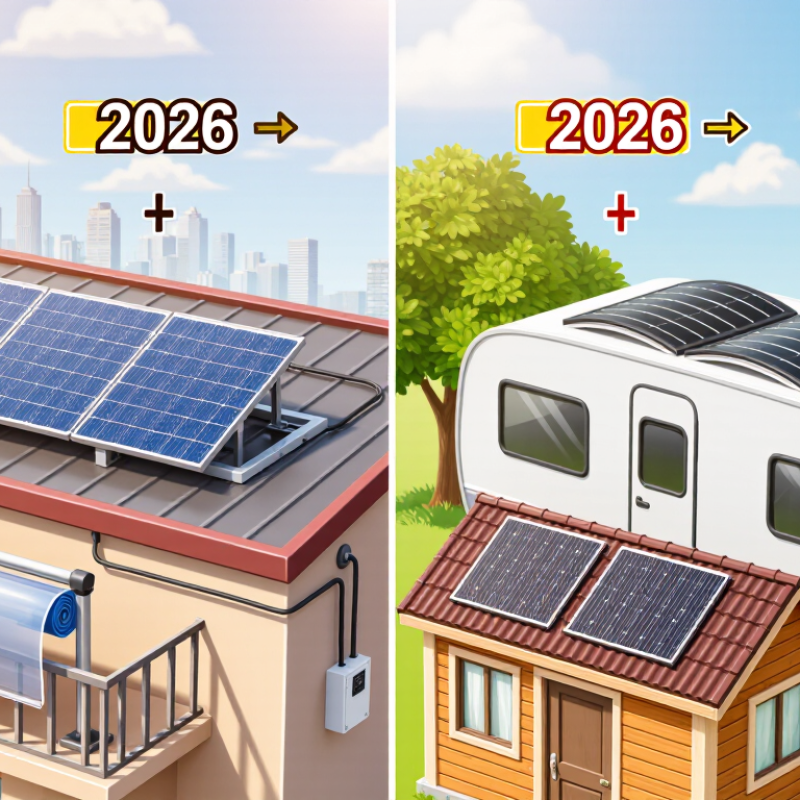
By 2026 technology standards, a rigid solar panel uses a solid glass front, framed laminate, and fixed cell structure. Its shape remains stable during transport, mounting, and operation. Most rigid modules use tempered glass, polymer encapsulant, photovoltaic cells, and a protective backsheet or second glass layer. Their design supports standard rooftop rails and ground-mounted systems.
Flexible solar panels use bendable materials, often thin-film cells, polymer faces, and lightweight composite layers. They can follow a curved roof, vehicle surface, or temporary structure. However, “flexible” does not mean endlessly foldable. Every panel has a specified bend radius, pressure limit, and installation method. Exceeding those limits can create hidden cracks or electrical faults. The boundary is not perfectly clean.
From field inspection experience, weight and surface shape often determine the first choice. A rigid panel may suit a strong roof with regular mounting points. A flexible panel may reduce structural load, but its adhesive layer needs careful preparation and inspection. Heat buildup can also reduce output on poorly ventilated surfaces. Testing should include electrical safety, moisture resistance, mechanical loading, and fire performance under applicable standards. Certification documents matter more than marketing language. I would not choose flexibility alone. Curved installation can look ideal, yet replacement may be harder, and long-term durability remains site-dependent. Even experienced installers can overlook drainage beneath a bonded panel. That small mistake can become expensive.
How to Choose Rigid or Flexible Solar Panels in 2026?
Rigid and flexible panels can produce useful power, but their efficiency gap remains significant. Typical rigid crystalline-silicon modules reach about 20–23% efficiency. Flexible products commonly deliver around 13–18%, depending on their cell technology and construction. The Fraunhofer ISE Photovoltaics Report 2024 places mainstream crystalline-silicon modules in the low-20% range. Its data also shows why flexible designs usually sacrifice efficiency for lower weight and easier installation. That trade-off is real.
A 400-watt rigid panel may occupy roughly two square metres. A flexible panel with similar output needs more surface area. On a small roof, that difference can decide the project. The IEA PVPS Trends 2024 report highlights continuing module efficiency gains and stronger power density across the solar market. However, laboratory records do not equal daily rooftop performance. Heat, shading, dust, and poor airflow reduce actual output.
I have found rigid panels easier to position precisely, especially when using fixed mounting rails. They also feel more predictable during windy weather. Flexible panels work better on curved roofs, lightweight structures, and temporary installations. Installation mistakes matter more than many buyers expect. Bending a panel too sharply can create hidden cell stress. A real-world test is wise: measure usable roof area, estimate afternoon shade, and compare expected annual watt-hours, not only the panel price. Flexible efficiency can disappoint. Sometimes, its lighter weight is still the better engineering choice.
Rigid solar panels typically deliver higher module efficiency, commonly around 20–23%, while flexible panels are commonly around 13–18%. Rigid panels are usually preferable when maximum power from limited roof space is the priority. Flexible panels can be useful on lightweight, curved, or portable surfaces where lower weight and easier installation matter more than peak efficiency.
The lower, midpoint, and upper values represent the typical efficiency ranges shown in the comparison; actual performance varies by cell technology, temperature, installation angle, shading, and operating conditions.
Weight changes installation decisions more than many buyers expect. A rigid panel commonly weighs 10–20 kg, while a flexible design often weighs only 2–6 kg. That difference matters on RV roofs, lightweight boats, balconies, and aging buildings. Four flexible panels may add roughly 8–24 kg, excluding wiring and supports. Four rigid panels could add 40–80 kg.
The IEA PVPS Trends 2024 report recorded global photovoltaic capacity above 1.6 terawatts by the end of 2023. This growth increases demand for safer, lighter installations. Fraunhofer ISE’s Photovoltaics Report 2024 places mainstream crystalline-silicon module efficiency near 20–23%. Flexible panels can reduce structural stress, but their usable output may vary with surface temperature, bending, and ventilation. A hot panel loses performance. Thin mounting gaps can make that worse.
I once assumed lower weight automatically meant a better choice. That was too simple. On a flat roof, rigid panels usually provide stronger mechanical protection and easier cleaning. On a curved roof, a 2–6 kg flexible panel may fit naturally and avoid heavy brackets. Check the roof’s load limit, wind exposure, cable routing, and walking access. Do not judge by weight alone. The lightest panel can become inconvenient if its surface scratches easily or replacement is difficult. Independent testing, warranty conditions, and measured operating temperature deserve equal attention.
Choosing rigid or flexible solar panels in 2026 starts with the roof, not the product brochure. Rigid panels suit strong roofs with clear, open surfaces. Their framed construction supports efficient airflow and easier maintenance. However, they add noticeable weight. A roof inspection should check load capacity, fixing points, drainage, and wind exposure before installation. Never assume an older roof can carry extra equipment.
Flexible panels work well on curved cabins, lightweight structures, and surfaces where drilling is difficult. They follow shallow contours and can reduce visual height. Yet their close contact with the roof may limit cooling. Heat can reduce output over time, especially in hot climates. A small air gap, where practical, may improve ventilation. This detail is often missed.
Climate changes the decision. In snowy regions, rigid panels need a mounting angle that supports snow shedding. Flexible panels may become harder to clean after heavy snowfall. Coastal air also demands corrosion-resistant fasteners and careful sealing.
Installation quality matters more than panel type alone. Use suitable adhesives only on compatible surfaces, and leave room for cable movement. I have seen neat installations fail because water collected beneath a flexible panel. That mistake is expensive.
The best choice matches roof load, surface shape, climate, and maintenance access. Measure twice. Plan for repairs, not just installation day. A flexible panel is not automatically safer, and a rigid panel is not always stronger. The roof decides.
How to Choose Rigid or Flexible Solar Panels in 2026?
Panel lifespan depends on more than its frame or weight. Rigid panels usually use glass, which resists moisture, ultraviolet exposure, and surface abrasion. Flexible panels can fit curved roofs, cabins, and vehicle surfaces, but repeated bending may accelerate fatigue. Their polymer layers can also age differently under heat and humidity. Real installations are less tidy than laboratory test chambers.
IEC 61215 confirms that a module design has passed performance and durability tests for terrestrial use. IEC 61730 addresses electrical and fire safety. These certifications matter, but they do not guarantee identical service life in every climate. Ask for current certificates, the tested construction, and independent laboratory reports. A certificate for one design may not cover a modified substrate, connector, or encapsulant. That detail is easy to miss.
Tips: Compare the claimed annual degradation rate with test conditions and warranty limits. Inspect edge seals, junction boxes, bend-radius instructions, and mounting pressure points. For flexible panels, request mechanical-cycle and damp-heat data. For rigid panels, check wind, snow, and impact ratings for the installation site. I would not choose from efficiency alone. A slightly heavier panel may deliver steadier output after ten years, while a flexible panel may solve a mounting problem no rigid module can handle. Evidence should decide.
| Assessment Dimension | Rigid Solar Panels | Flexible Solar Panels | 2026 Selection Guidance |
|---|---|---|---|
| Typical Construction | Usually crystalline silicon cells laminated between protective glass and a polymer backsheet, supported by an aluminum frame. | Usually uses lightweight crystalline silicon or thin-film technology laminated on a polymer, composite, or other flexible substrate. | Confirm the cell technology, encapsulant, substrate, junction box, connectors, and mounting method rather than relying only on the word “flexible.” |
| Expected Service Life | Commonly designed for approximately 25–30 years of outdoor operation when correctly installed and maintained. | Often designed for approximately 10–20 years, although the actual value depends strongly on construction, installation, bending, heat, moisture, and warranty terms. | Use the manufacturer’s published product and performance warranties as a minimum planning reference. A certification does not by itself guarantee a specific service life. |
| Annual Power Degradation | Many modern crystalline-silicon products specify a low annual degradation rate, commonly around 0.25%–0.60% after the initial period. | Degradation varies more widely. Polymer-based flexible modules may show higher or less predictable degradation if exposed to repeated flexing, high heat, moisture, or poor lamination quality. | Compare the first-year degradation, annual degradation rate, and end-of-warranty power level. Do not compare only the initial rated wattage. |
| Illustrative 25-Year Output | At 0.40% annual degradation after year one, retained output is approximately 90.6% after 25 years, excluding other failures. | Calculate using the specific product warranty because flexible-module degradation can differ substantially between designs. | For a simple estimate, retained output after n years can be approximated as: initial output × (1 − annual degradation rate)n. |
| Mechanical Durability | Generally offers strong resistance to wind, snow, handling, and long-term dimensional change when the frame and mounting system are correctly engineered. | Can tolerate limited curvature, but repeated bending, sharp creases, point loads, and unsupported movement can damage cells, interconnections, laminates, or cable exits. | Check the permitted bend radius, maximum flex cycles if stated, allowable mounting surfaces, clamp or adhesive requirements, and load ratings. |
| Weight and Portability | Heavier and less convenient for temporary installations, curved surfaces, or structures with limited load capacity. | Usually lighter and easier to transport or install on curved surfaces, vehicles, lightweight roofs, and portable systems. | Choose flexible construction when weight or surface geometry is the primary constraint, but verify that the roof or structure is suitable for the product’s installation method. |
| Heat Management | Rigid framed modules are commonly installed with an air gap that helps rear ventilation and reduces operating temperature. | Modules bonded directly to a surface may have limited rear airflow and can operate at higher temperatures, depending on the substrate and installation design. | Review the temperature coefficient of maximum power and the installation ventilation requirements. Higher operating temperature generally reduces instantaneous power output. |
| Moisture and UV Resistance | Glass-front construction generally provides a robust barrier against moisture and ultraviolet exposure when seals, backsheets, and junction boxes remain intact. | Performance depends heavily on polymer selection, edge sealing, encapsulation, and resistance to ultraviolet exposure and water vapor. | Request damp-heat, humidity-freeze, UV, and outdoor-exposure test information where available, especially for permanently exposed flexible modules. |
| Repair and Replacement | Standardized dimensions and framed construction can simplify replacement, inspection, and mounting-system compatibility. | Product dimensions, adhesives, cable routing, and removal procedures may be more application-specific and difficult to replace without surface damage. | For long-term projects, confirm spare-module availability, connector compatibility, removal procedures, and recycling or disposal arrangements. |
| IEC 61215 Requirement | Look for an applicable IEC 61215 design-qualification and type-approval standard for the module technology and intended environment. | Look for an applicable IEC 61215 standard covering the specific flexible-module design; the test scope must match the module technology and construction. | IEC 61215 evaluates design qualification and durability through environmental and performance tests. It is not a lifetime guarantee and does not replace installation engineering. |
| IEC 61730 Requirement | Look for IEC 61730 safety qualification covering electrical, mechanical, fire-related, and construction safety aspects applicable to the module. | Look for IEC 61730 safety qualification applicable to the flexible construction, insulation system, materials, wiring, and intended mounting conditions. | IEC 61730 addresses module safety, including protection against electric shock, fire hazards, and mechanical risks. Verify the exact edition, part, and product scope on the certificate. |
| Certification Verification | Request a valid certificate, test report, model list, rated electrical limits, and installation instructions from an accredited or recognized certification body. | Request the same documentation and check that the certified model is not merely a visually similar product from the same product family. | Verify model numbers, rated voltage and current, maximum system voltage, fire classification where relevant, certification body, certificate validity, and applicable standard edition. |
| Installation Risk | Incorrect clamping, excessive loads, poor grounding, shading, or inadequate ventilation can still cause damage or reduced output. | Incorrect adhesive, trapped air, uneven surfaces, excessive curvature, water ingress, or cable strain can significantly reduce reliability. | Follow the product-specific installation manual. Certification cannot compensate for installation outside the stated mechanical, electrical, or environmental limits. |
| Best-Fit Applications | Permanent residential, commercial, utility, agricultural, and ground-mounted installations where long service life and robust mechanical support are priorities. | Curved roofs, vehicles, boats, temporary systems, portable equipment, and structures where low weight or conformability is more important than maximum longevity. | For a fixed 25-year energy project, rigid modules are usually the lower-risk default. Select flexible modules when their application advantages clearly outweigh their durability trade-offs. |
| Recommended Decision Priority | Prioritize verified certification, long-term degradation data, mechanical load ratings, thermal performance, warranty terms, and serviceability. | Prioritize verified certification, bend-radius limits, flex-cycle information, moisture resistance, thermal design, adhesive compatibility, and realistic replacement planning. | Compare lifetime energy yield and total ownership cost—not only purchase price, weight, or peak wattage. |
Rigid panels commonly weigh 10–20 kilograms each. Flexible panels often weigh 2–6 kilograms. Weight adds up quickly.
Flexible panels usually create less structural stress. Still, inspect the roof’s load limit first. Light does not mean risk-free.
Often, yes. Their frames improve airflow, cleaning, and mechanical protection. They still require secure supports and adequate roof strength.
They suit curved cabins, lightweight structures, and surfaces where drilling is difficult. Their low profile can also reduce visual height. Fit matters.
Yes. Close contact with a roof can limit cooling. A small ventilation gap may help when the surface allows it.
Snowy areas may favor angled rigid panels for easier snow shedding. Coastal areas need corrosion-resistant fasteners and careful sealing.
Check drainage, wind exposure, cable movement, and walking access. Water trapped beneath a flexible panel can cause expensive damage.
No. Also compare measured operating temperature, surface durability, maintenance access, testing, and warranty conditions. My first assumption was too simple.
Four flexible panels may add about 8–24 kilograms, excluding wiring. Four rigid panels may add 40–80 kilograms. Supports add more.
Inspect the roof, measure available space, and identify fixing points. Plan for cleaning and replacement, not only installation day. Measure twice.
Choosing the right solar panel in 2026 starts with understanding the differences between rigid and flexible designs. Rigid panels typically use framed crystalline cells and deliver higher efficiency, usually around 20–23%, while flexible panels generally provide 13–18% efficiency. Rigid models often weigh 10–20 kg per panel, whereas flexible designs may weigh only 2–6 kg, making them easier to transport and suitable for surfaces with limited load capacity.
When deciding how to choose between rigid and flexible solar panels, consider the roof’s structural strength, surface shape, available installation area, local climate, and maintenance needs. Rigid panels are often preferable for flat, durable roofs requiring maximum energy output, while flexible panels can suit curved, lightweight, or mobile surfaces. Also compare expected lifespan and annual degradation, and confirm that the selected product meets relevant IEC 61215 and IEC 61730 certification requirements for performance, durability, and electrical safety.

Ran Solar